Post-mortem: DC's AI synthesis rollout that almost killed qual depth
A DC govtech UX team cut analysis time with AI synthesis tools—then watched qual depth collapse. Here's the honest post-mortem on what went wrong and how they recovered.
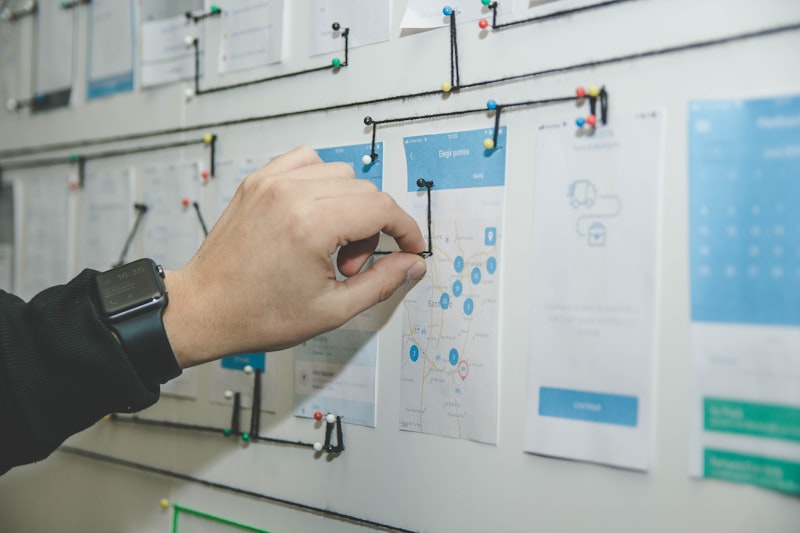
Post-mortem: DC's AI Synthesis Rollout That Almost Killed Qual Depth
In the fall of 2024, a mid-sized govtech UX team supporting a federal-adjacent contractor in the DC Metro corridor made a decision that looked brilliant on paper: adopt an AI synthesis tool to compress their research analysis cycle from two weeks to three days. By Q1 2025, their sprint velocity was up, their stakeholder decks were prettier, and their researchers were quietly losing confidence in their own work. The UX research AI synthesis rollout had accelerated everything except understanding.
This is the honest account of what happened, what the root causes were, and what DC-area UX teams can do differently before they repeat it.
The Lede: Speed Without Signal
The team — call them the Civic Experience Group, a composite drawn from several DC Metro practitioners who shared their stories — had twelve researchers supporting policy-adjacent software products used by federal employees and contractors. Their work was high-stakes: they were informing systems that real people depended on, from benefits workflows to procurement interfaces. Qualitative depth wasn't a luxury for them. It was the job.
When they introduced an AI synthesis platform to auto-tag transcripts, surface themes, and generate insight summaries, the headline cost wasn't measured in dollars. It was measured in credibility. By month four, two senior researchers had flagged that the AI-generated themes were flattening nuance in ways that were hard to articulate to non-researchers but unmistakable to anyone who had sat in the sessions themselves. One described it as "getting the plot of a book summarized without anyone telling you the protagonist was lying the whole time."
Three months later, a product decision made on AI-synthesized research was walked back after usability testing revealed a fundamental misread of user mental models — a misread the researchers suspected the synthesis tool had obscured.
Timeline of the Incident
August 2024: Team lead attends a design and UX conference session on AI-assisted research. The demo is compelling. Two competing tools are evaluated over six weeks.
October 2024: Tool is adopted. Researchers are trained in a two-hour onboarding session. Leadership is told the team can now handle 40% more research volume.
November–December 2024: Early results look good. Turnaround drops from 14 days to 4. Stakeholders are pleased. Researchers feel productive.
January 2025: A senior researcher doing a retrospective on a completed project compares the AI synthesis output to her own hand-coded notes. She flags a pattern: the tool is consistently surfacing task-level friction but missing emotional and contextual subtext — the "why" beneath the "what."
February 2025: A second researcher raises similar concerns independently. The team lead schedules an internal review but delays it due to sprint commitments.
March 2025: A product team makes a navigation redesign decision based primarily on AI-synthesized research. The decision is framed confidently in the stakeholder brief.
May 2025: Usability testing on the new navigation reveals that users in the primary persona group — federal employees with high task pressure and low tolerance for ambiguity — have developed workarounds that the synthesis had categorized as "preference variance" rather than coping behavior under stress. The redesign is paused. Two months of engineering work is deprioritized.
June–August 2025: The team conducts a full post-mortem. They redesign their synthesis workflow. They publish internal guidelines. Two researchers leave — not because of the incident, but the incident is cited in exit conversations.
Root Cause Analysis
Technical: The Tool Optimized for Frequency, Not Weight
The AI synthesis platform the team used was strong at pattern recognition across large data sets. It was designed to surface what was said most often, tagged with sentiment labels. What it could not do — and this was never hidden in the documentation, to be fair — was weight the significance of a single utterance from a single participant who represented an underserved but critical user segment.
In govtech and policy-adjacent UX work, this matters enormously. A benefits portal might have power users who adapt to any interface and edge-case users whose inability to complete a task has cascading real-world consequences. Frequency-weighted synthesis will almost always deprioritize the edge case. A skilled researcher will flag it anyway. The AI tool had no mechanism for that judgment.
Specific failure modes identified:
- Theme collapse: Distinct but related concerns were merged into single tags, erasing the distinction between "I don't understand this label" and "I don't trust this system."
- Context stripping: The tool summarized what participants said but not the circumstances under which they said it — whether they were rushed, whether they'd just failed a task, whether they paused for a long time before answering.
- Persona averaging: Outputs skewed toward the median participant experience, which in a diverse federal workforce is a meaningful distortion.
Organizational: Speed Was the Success Metric
The team lead — under legitimate pressure from a client that valued throughput — had framed the tool adoption around velocity. The success metrics were turnaround time and volume capacity. There was no metric for synthesis quality. There was no structured comparison of AI outputs to researcher-coded analysis. There was no mechanism for researchers to formally flag concerns without it feeling like resistance to a decision already made.
This is a DC-specific pressure worth naming directly. In a city where so much tech work sits adjacent to government procurement cycles and policy windows, there is intense pressure to produce research on political timelines rather than research timelines. The AI tool didn't create that pressure. It became the instrument through which that pressure expressed itself.
What Worked in the Recovery
The Civic Experience Group's recovery was methodical and, ultimately, successful. Here's what actually moved the needle:
1. They kept the tool — and constrained it. Rather than abandoning AI synthesis, they redefined its role. It now handles first-pass transcript processing: timestamps, speaker identification, initial tag suggestions. Researchers treat its output as raw material, not findings.
2. They introduced a "significance override" practice. Any researcher can mark a data point as high-significance regardless of frequency. These are explicitly excluded from AI synthesis and hand-coded. This gave researchers formal permission to exercise judgment without it feeling like they were second-guessing the tool.
3. They built a two-track synthesis process. AI synthesis runs in parallel with researcher synthesis for the first project in any new product area. Outputs are compared before the AI-only track is trusted for follow-on work. This calibration step added about six hours per project but restored researcher confidence significantly.
4. They changed the success metric. Turnaround time is still tracked. So is "insight challenge rate" — the frequency with which downstream product decisions are revised based on follow-up research. Early data suggests this has improved since the workflow change.
5. They talked about it publicly. Researchers from the team have presented at local Washington DC tech meetups focused on design and civic technology. That transparency created goodwill and surfaced at least three other teams navigating similar issues.
What DC Teams Can Change Today
If your UX team is using or evaluating AI synthesis tools — and if you're working in DC's govtech, cybersecurity, or defense tech ecosystem, the odds are reasonable that you are — here's what the Civic Experience Group learned that generalizes:
Audit your synthesis tool's underlying logic before you trust its outputs. Does it weight by frequency? Does it have any mechanism for flagging low-frequency, high-significance data? If you can't answer these questions, you don't know what the tool is actually doing to your data.
Never let AI synthesis be the only path a data point travels. Researchers need to stay in contact with raw transcripts. If your workflow has eliminated that contact in the name of efficiency, you've optimized away the thing that makes qualitative research valuable.
Name the organizational pressure explicitly. If your team is adopting AI tools because of timeline pressure from procurement cycles or policy windows, say that out loud in your team retrospectives. It doesn't go away when you don't name it — it just shapes decisions invisibly.
Invest in researcher calibration, not just tool training. Two hours of onboarding teaches people how to use a tool. It doesn't teach them when not to trust it. Build in time for researchers to compare AI outputs to their own analysis, especially early in a tool adoption.
Connect with peers who are working through the same questions. DC's UX and developer community has a concentration of researchers doing high-stakes work in regulated and policy-adjacent environments. That's a specific set of constraints that generic AI tool documentation won't address. Peer learning matters here. If you're hiring researchers who understand this environment, browse tech jobs in the DC Metro area where these skills are increasingly in demand.
FAQ: Preventing AI Synthesis Failures in UX Research
How do you know if an AI synthesis tool is flattening qualitative nuance in your research?
The clearest signal is divergence between what your researchers remember from sessions and what the synthesis output says. If researchers consistently feel like something important is missing from AI-generated themes — and especially if different researchers feel this independently — that's not subjectivity. That's the tool failing to capture signal that trained humans are picking up. Build in structured comparison between AI output and researcher-coded analysis at least once per project type to detect this early.
Is there a category of UX research where AI synthesis is reliably trustworthy?
AI synthesis tools perform best on large-scale, relatively homogeneous data sets where frequency is a meaningful proxy for importance — usability benchmarking studies, large survey open-ends, or session recordings where the task structure is tightly controlled. They perform worst on exploratory research, studies with highly diverse participant groups, and any context where the meaning of what someone says is heavily dependent on circumstances the transcript doesn't capture. In DC's govtech context, that second category describes most of the important research.
Should research teams tell stakeholders when findings were AI-synthesized?
Yes — and not just as a disclosure formality. Stakeholders who understand the tool's limitations are better equipped to ask the right follow-up questions. "Is this finding robust across all user segments or is it a frequency-weighted average?" is a question a stakeholder can only ask if they know how the sausage was made. Transparency here is also a trust-building practice, especially in environments where research informs policy or procurement decisions with real accountability attached.
Find Your Community
If this post-mortem resonated with your team's experience, you're not alone — and you don't have to figure it out in isolation. Washington DC has an active community of UX researchers, designers, and technologists navigating exactly these questions in govtech, defense, and policy-adjacent contexts.
Find Washington DC tech meetups, design events, and peer communities →